
In ad-supported streaming, not every problem starts with a visible failure. Sometimes the stream continues, the viewer keeps watching and the platform looks stable. But somewhere in the video delivery chain, an ad opportunity has been missed, an impression has not been completed, or a break has not played as expected. By the time the report is created, the moment is already gone.
This is one of the most difficult parts of ad-supported OTT: revenue is created in real time, yet many problems are still understood after the event, when a missed ad break cannot be sold again later and a failed impression can no longer be recovered once the viewer session has ended. For teams responsible for video services, this creates a simple but important question: can we see what happened while there is still time to act
When ad delivery fails silently
The challenge is partly technical, but it is also about how teams work. Operations, product, and commercial teams often look at the same service from different angles. Operations focus on stream health and delivery stability; product teams may look at playback behavior and viewer experience, while commercial teams follow impressions, fill rate, and campaign performance.
All of these views are valid, but when they are disconnected, the investigation becomes slower. One team sees a drop in ad performance, another sees nothing unusual in the stream, while a third might find playback instability on certain devices. Everyone has a piece of the story, but no one has the full picture.
Ad-supported streaming depends on a chain of events that has to work from beginning to end. The process requires accurate SCTE-35 signaling to surface the ad opportunity, an immediate response from the ad delivery workflow, and correct execution by the client device to initiate and complete playback without compromising the viewer experience. If something breaks at any point, the commercial impact can be immediate. But unless the different parts of the chain are connected, it can be hard to know where the issue started.
“Was the ad marker missing, or was the break window not recognized?” “Did the ad get delivered but fail to play?” “Did playback quality affect completion?” “Did the issue happen across a service, a device type, or only in individual sessions?”
These are not questions that can be answered properly from one dashboard or one report. They require a connected view of the ad journey, from signal to screen.
Most teams already have plenty of data, but they lack a way to connect it
This is the idea behind ad observability: it is not about adding more data for teams to interpret manually. Most service providers already have a lot of data across headend systems, CDN logs, ad platforms, client devices and viewer sessions, and the real issue is connecting that data in a way that helps people understand what is happening.
At the stream level, teams need to verify that SCTE-35 signals and break windows are present and correct. At the service level, they need to see indicators such as impressions, fill rate, ad breaks and completion ratios. At the device level, they need to understand whether playback issues such as stalls, startup delays or bitrate shifts are affecting the ad experience. At the session level, they need to see what actually happened for an individual viewer: whether the device entered the break, whether the ad started, whether it completed, and where the chain failed if it did not.
From signal to session
The value of ad observability comes from being able to follow the same ad opportunity across the full delivery chain, from the stream signal to what happened in the viewer session. For operations teams, it helps identify signaling and delivery issues faster, for product, it connects ad playback to the viewer experience and for commercial teams, it gives more context behind fill rate, reach and delivery performance. Instead of each team working from separate data, they can look at the same issue through one connected workflow.
At Agama, this thinking is reflected in Ad-insert Observability & Analytics. The solution brings together stream-level inspection, service-level ad analytics, device-level insight and session-level diagnostics, giving teams visibility from the headend signal to the viewer session. The goal is to show teams where a break failed and why, rather than simply confirming that it did.
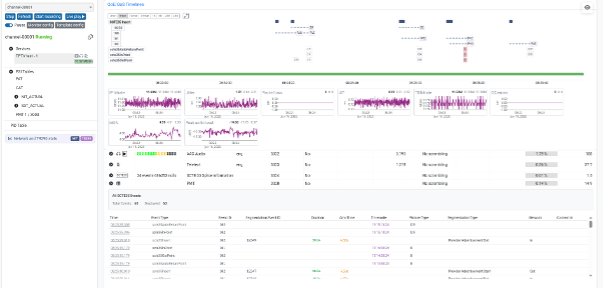
Figure: From signal to session: ad observability across the chain
The visual also reflects the different roles involved in ad delivery assurance: operations teams need live root cause troubleshooting, product teams need end-to-end QoE for ads, and commercial teams need trustworthy delivery KPIs.
Advertising is becoming part of the overall viewer experience, and when an ad break is poorly handled, the impact goes beyond lost revenue. It can also affect service quality, customer perception, and trust in the platform, which is why ad delivery can no longer be treated only as a commercial report or as an issue hidden inside an isolated technical system. It needs to become part of service assurance, connected to the same operational visibility that protects the quality of the video experience.
The future of ad-supported OTT will not only be shaped by better targeting or more inventory, by the ability to trust the delivery chain behind every ad opportunity. When an ad break disappears, the real question is not who finds out later; it is whether the right teams can see it, understand it, and act while it still matters.

About Johan Görsjö
Johan leads the Product and Development, responsible for revolutionizing Agama’s products and solutions. He works with Product Strategy and closely with Sales and Marketing.
Johan has over 20 years of experience in the Telecom and Video industry.
